Key Takeaways
- Focus on Satisfaction, Not Just Clicks: Google now prioritizes “Content Satisfaction Signals,” meaning you must provide immediate value to prevent users from bouncing back to the search results.
- Structure for AI Retrieval: To be cited by tools like ChatGPT or Gemini, your content must use clear entity signals and “block-structured” formats that AI can easily parse.
- E-E-A-T is Your Competitive Edge: Demonstrating first-hand experience and expertise is the best way for smaller sites to outrank big brands that often rely on generic, low-quality content.
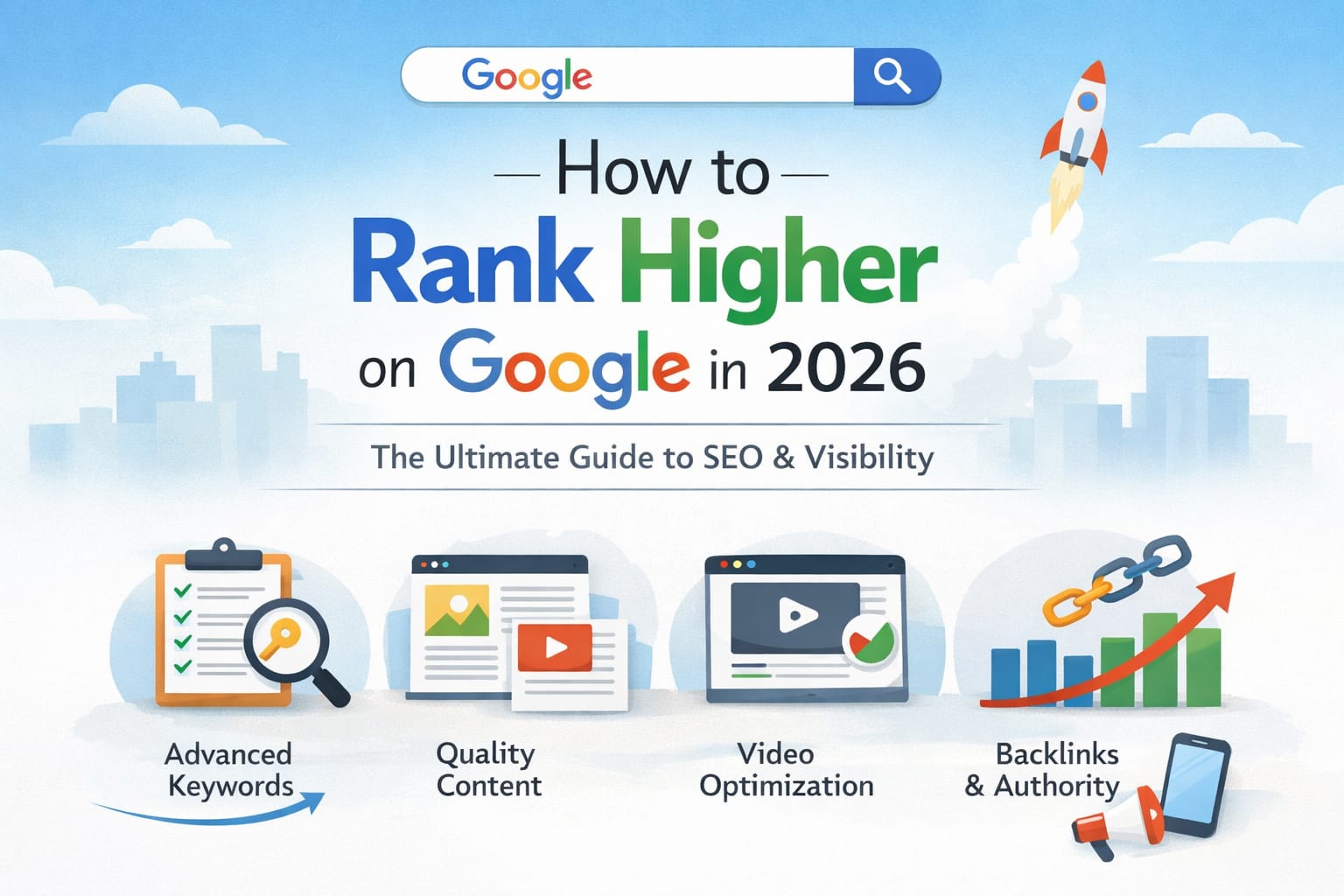
Ranking high on Google in 2026 requires a strategy that balances traditional search engine optimization (SEO) with the new world of Answer Engine Optimization (AEO).
Google no longer just provides a list of links; it assembles answers using passages pulled from across the web for features like AI Overviews (AIOs). To win, your brand must be visible across organic results, AI summaries, and LLM chatbots.
How Does Google Rank Pages Today?
Google ranks pages today by matching specific content “chunks” to user intent, prioritizing high-quality information that demonstrates Experience, Expertise, Authoritativeness, and Trustworthiness (E-E-A-T).
The algorithm evaluates hundreds of factors, including relevance, page speed, mobile-friendliness, and backlinks. However, a major shift in 2026 is that Google now “watches” how people react to your site—if users find your answer quickly and stop searching, Google views your content as high quality.
| Feature | Traditional SEO Focus | 2026 AI Search Focus |
| Primary Goal | Ranking #1 for keywords | Being cited as a trusted source |
| Content Unit | Entire web pages | Specific passages and “entities” |
| Trust Signal | Backlinks from other sites | Brand mentions and consensus |
| User Metric | Click-through rate (CTR) | Content Satisfaction Signals |
The “Invisibility Problem”: Why SEO Isn’t Enough
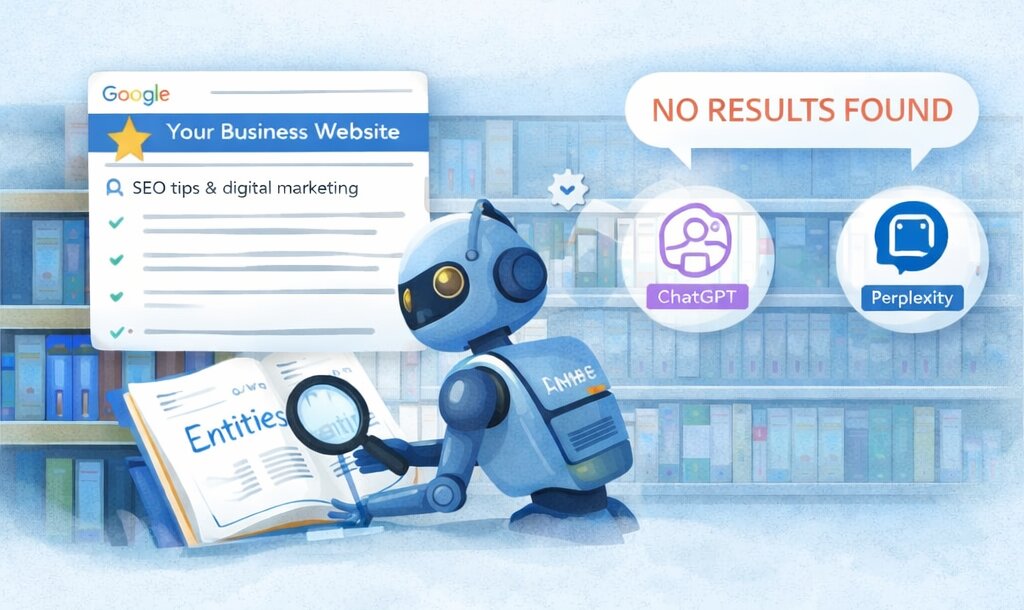
Many businesses rank on page one of Google but never get mentioned by AI tools like ChatGPT or Perplexity. This is known as the “Invisibility Problem,” where keyword-focused content lacks the structure AI needs to retrieve it.
AI models don’t just look at keywords; they look for “entities”—the people, places, and things your business relates to. If your site doesn’t clearly define what you do and who you serve using structured data, you remain invisible to the 89% of B2B buyers now using generative AI in their purchasing process.
Think of it like this: Retrieval-Augmented Generation (RAG) is like giving an AI a research assistant that checks facts in a library before the AI speaks; if your “book” isn’t indexed correctly on the shelf, the assistant will never find it.
To make sure your images are also “readable” by these AI assistants, tools like altgeneratorai can automatically create the descriptive alt text that search engines and LLMs crave.
The CITABLE Framework for AI Visibility
To fix the invisibility problem, you should use the CITABLE framework, an engineering approach to content architecture.
- C – Clear Entity and Structure: Start every post with a “Bottom Line Up Front” (BLUF) that defines your topic.
- I – Intent Architecture: Answer the main question plus adjacent questions buyers actually ask.
- T – Third-Party Validation: Reference reviews from sites like G2 or Reddit to build consensus.
- A – Answer Grounding: Every claim should link to a verifiable source or official announcement.
- B – Block-Structured for RAG: Use 200-400 word sections with clear headings and tables.
- L – Latest and Consistent: Use timestamps and ensure your facts are the same across all platforms.
- E – Entity Graph and Schema: Use schema markup to tell AI exactly what your product or business is.
Beating Big Brands with “Hidden Gems”
Google has a persistent issue with favoring big brands, even when they provide low-quality or “cookie-cutter” content. However, Google’s new Gemini-powered systems are getting better at finding “hidden gems”—high-quality content from topic experts and enthusiasts.
Smaller sites can win by going “deep, not wide” on their topics. Instead of writing generic articles, share original research, unique data, or first-hand testing that a large corporate site wouldn’t take the time to do.
For example, if you are running an e-commerce store, don’t just copy manufacturer descriptions. Use a tool like the Instant Product Importer to get your products listed quickly, then spend your time adding your own unique expertise and photos to every page.
Essential Steps to Rank Higher in 2026
- Nail the Basics: You still need a fast site, mobile optimization, and target keywords in your title tags.
- Optimize for Speed: Page speed is a critical ranking factor; use imagebulking to shrink image sizes and inject essential metadata without losing quality.
- Lead with the Answer: Don’t bury the lead—put your main solution at the very top of the page to satisfy both users and AI snippets.
- Use Visuals Wisely: Use screenshots, charts, and step-by-step guides instead of generic stock photos. If you need help describing these visuals for search engines, Promptingimage can help you create perfect image descriptions.
Dominating Local Search
If you are a local business, you compete on three pillars: Relevance, Proximity, and Prominence. While you can’t change your physical location, you can beat competitors by having a more complete Google Business Profile and a steady stream of recent reviews.
| Local Ranking Factor | How to Beat Competitors |
| GBP Completeness | Fill every field, add high-quality photos, and post weekly updates. |
| Review Velocity | Aim for 5-10 new reviews monthly rather than relying on old feedback. |
| Citation Consistency | Ensure your Name, Address, and Phone (NAP) are identical everywhere. |
Technical FAQ
How long does it take to rank on Google in 2026? Most businesses see initial improvements in 30-60 days, with significant ranking shifts taking 3-6 months depending on competition.
What is the difference between SEO and AEO? SEO focuses on ranking pages for keywords in search results, while AEO (Answer Engine Optimization) focuses on structuring content so AI models can cite you in generated answers.
Does page speed really affect my ranking? Yes, Google considers page speed a ranking factor because it directly impacts user experience; slow sites cause users to bounce, which sends a negative signal to Google.
How do I get cited by ChatGPT or Gemini? You must use clear entity signals, implement schema markup, and ensure your brand information is consistent across third-party platforms like LinkedIn and Reddit.