Key Takeaways
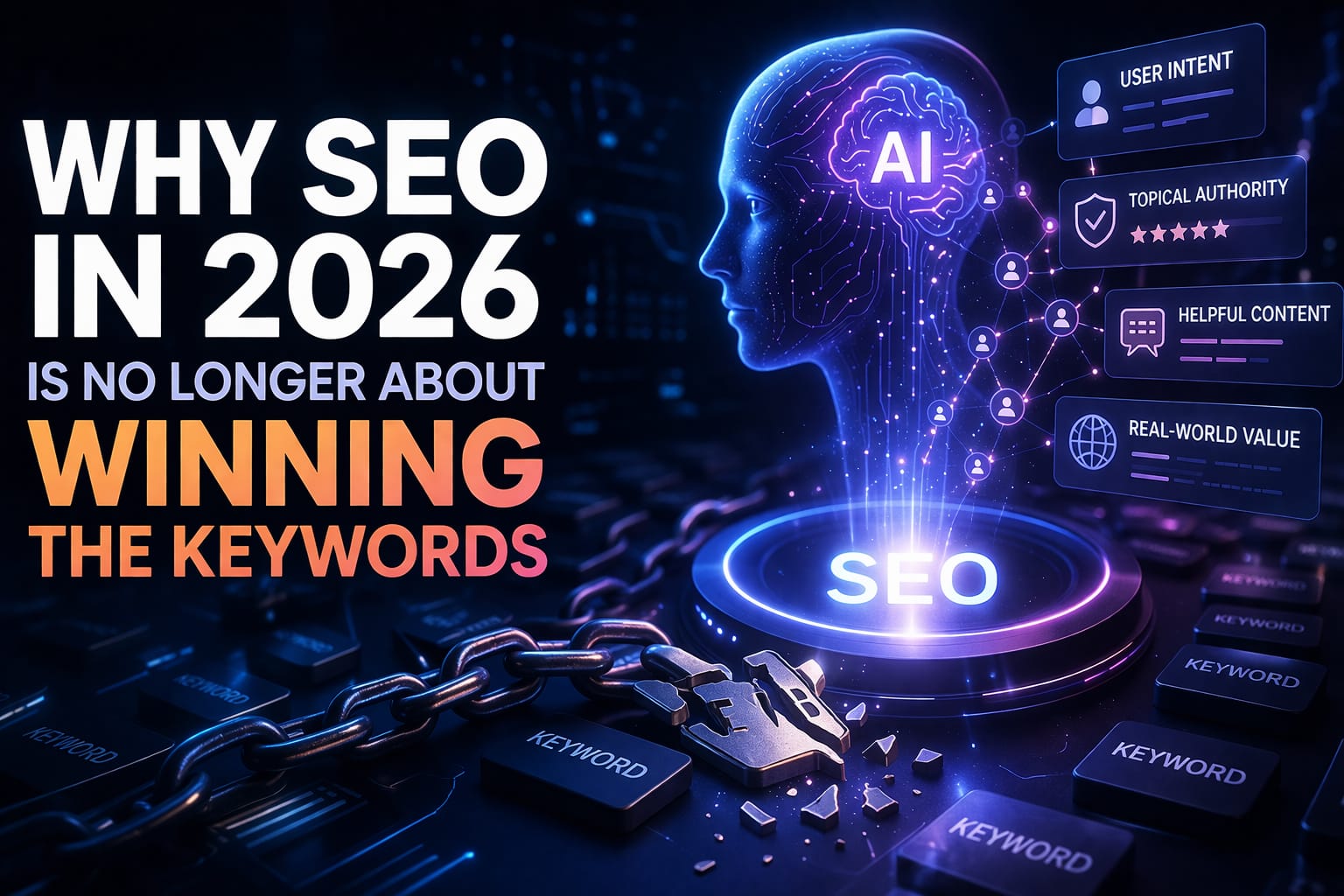
- Keywords are now signals, not the foundation. Search engines in 2026 prioritize credibility, user intent, and usefulness over simple phrase matching.
- AI Citations are the new “Page 1.” With zero-click searches exceeding 60%, appearing in AI Overviews (AIO) and Generative Engine Optimization (GEO) is critical for traffic.
- SEO is a reputation system. Rankings are earned through E-E-A-T (Experience, Expertise, Authoritativeness, and Trustworthiness) and strong brand signals across the web.
The New Reality: Why Your Old SEO Strategy is Failing
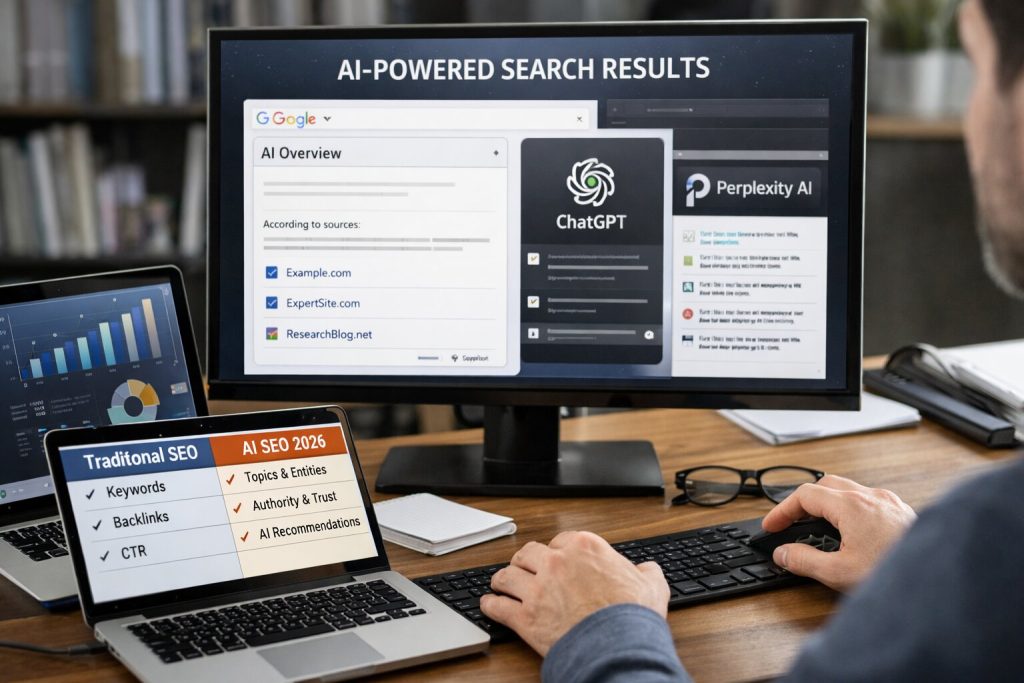
AI SEO in 2026 is the process of optimizing your digital presence so AI-powered engines—like Google AI Overviews, ChatGPT, and Perplexity—understand, trust, and recommend your content as the best answer to a user’s query. It is no longer about just “ranking” in a list of blue links; it is about becoming the cited authority that AI tools use to generate their answers.
If you are still obsessing over keyword density and buying bulk backlinks, you are playing a game that ended years ago. Search engines now act more like humans; they evaluate whether your business is real, if your content comes from actual experience, and if you truly solve the user’s problem.
| Feature | Traditional SEO (Old Way) | AI-Driven SEO (2026 Way) |
| Primary Focus | Specific Keywords | Topics & Semantic Entities |
| Content Goal | Ranking Positions | AI Citations & Recommendations |
| Link Strategy | Quantity of Backlinks | Quality, Relevance & Trust |
| Optimization | Manual Keyword Placement | AI-Assisted Intent Matching |
| Success Metric | Click-Through Rate (CTR) | Brand Authority & Conversions |
How AI Search Engines Actually “Read” Your Content
Think of SEO in 2026 like a recommendation from a trusted friend. In the past, the “friend” (Google) just gave you a list of addresses to check out. Today, that friend reads every book in the library, summarizes the best advice, and tells you exactly which expert you should trust and why.
AI systems don’t just look for words; they look for Entities. An entity is a concept, person, or brand. When you talk about “Email Marketing,” the AI looks for related entities like “Automation,” “Segmentation,” and “CTR” to see if you actually know the topic.
To help these AI systems “see” your content better, visuals are key. You can use Promptingimage.com to generate precise descriptions for your AI images, making sure they align perfectly with your technical topics.
The Rise of the Zero-Click Era
Data shows that over 60% of searches now end without a single click to a website. This is because AI Overviews answer the question directly on the search page. To survive, your content must be structured so that AI engines must cite you as the source of that information.
Chart Description: The Death of the Click Imagine a bar chart showing 2020 vs 2026. In 2020, organic clicks take up 60% of the bar. In 2026, the bar is dominated by “Zero-Click/AI Answers” (60%+), with organic clicks shrinking to a smaller segment. This visualizes why being the “cited source” is now more important than just being on page one.
The 3 Pillars of Digital Success in 2026
To rank today, you must master three specific areas that work together to build your “Search Experience Optimization”.
1. Traditional Search Visibility (The Foundation)
You still need technical health, but it’s now the “minimum requirement” to stay in the game. This includes fast load speeds, mobile optimization, and secure HTTPS.
To make your site fly, use imagebulking.com. It shrinks your image sizes and injects essential metadata automatically, ensuring your technical SEO is flawless without manual work.
2. AI Citation Presence (AIO/GEO)
This is the fastest-growing part of marketing. You need to format your content so AI can easily extract facts. Use clear headings, bullet points, and structured data (Schema Markup).
3. Conversion-Focused Strategy
Since traffic is harder to get, the visitors who do arrive are more precious. Your website shouldn’t just be a brochure; it should be your best salesperson, answering “Why choose you?” immediately.
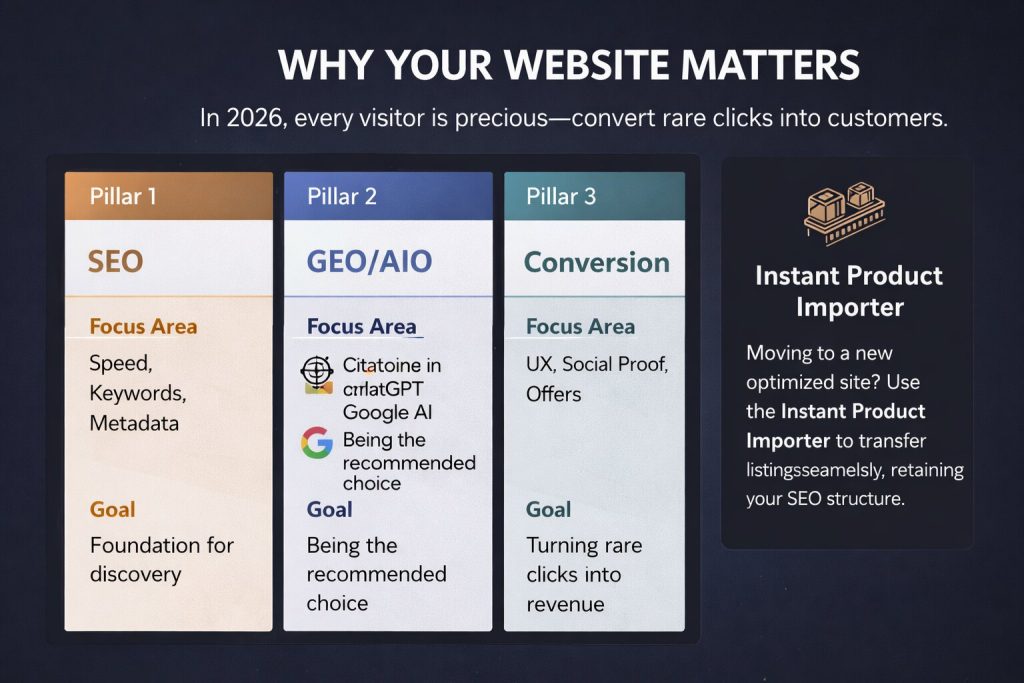
If you are moving products from an old store to a new, optimized site, use the Instant Product Importer. it moves your listings without the manual headache, keeping your SEO structure intact.
| Pillar | Focus Area | Goal |
| Pillar 1: SEO | Speed, Keywords, Metadata | Foundation for discovery |
| Pillar 2: GEO/AIO | Citations in ChatGPT/Google AI | Being the recommended choice |
| Pillar 3: Conversion | UX, Social Proof, Offers | Turning rare clicks into revenue |
Mastering Topic Clusters: Content That AI Loves
AI engines favor “Topical Authority” over isolated blog posts. Instead of writing one article about “Coffee Roasting,” you create a Topic Cluster.
- Pillar Page: A massive, 3,000-word guide covering everything about coffee roasting.
- Supporting Pages: Individual articles on “Best Roasting Temperatures,” “Sourcing Beans,” and “Roasting Equipment Reviews”.
- Internal Linking: Every supporting page links back to the pillar, and the pillar links to them.
This “web” of content signals to the AI that you are a true expert, not just someone chasing a single keyword.
To make these clusters visually appealing, you need high-quality alt text for every image so AI can “read” your visuals. Use altgeneratorai.com to create quick, automatic image descriptions that boost your semantic relevance.
E-E-A-T: The Trust Economy
Google’s E-E-A-T (Experience, Expertise, Authoritativeness, Trustworthiness) is no longer a suggestion; it is a primary ranking factor.
- Experience: Show that you have actually done what you are writing about.
- Expertise: Use data, original insights, and deep technical knowledge.
- Authoritativeness: Get mentions from other trusted brands in your industry.
- Trustworthiness: Use real author bios, clear contact info, and honest reviews.
Search engines are now rewarding real businesses over faceless, AI-generated “niche sites”. If your brand isn’t talked about elsewhere on the web, your rankings will likely collapse.
Technical FAQ
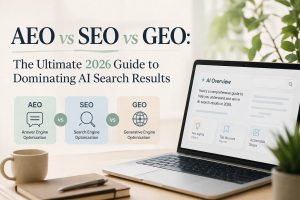
What is the difference between SEO and GEO? Traditional SEO focuses on ranking a website in a list of links using keywords and backlinks. GEO (Generative Engine Optimization) focuses on getting your content cited and summarized by AI engines like ChatGPT and Google AI Overviews.
Is keyword research still important? Keywords are now “signals” rather than the foundation. You should use them to understand what users are looking for, but you must optimize for the intent and the topic rather than just repeating a phrase.
How do I get cited in AI Overviews? You must provide clear, structured, and authoritative answers. Using FAQ schema, structured data, and answering questions directly in your content makes it easier for AI to extract and credit your site.
Why is my traffic dropping even if my rankings are the same? This is often due to “Zero-Click” searches. AI is answering the user’s question on the search results page, so they don’t need to click your link. To fix this, you must offer “deep value” content that goes beyond what a simple AI summary can provide.