Key Takeaways
- Search has evolved from “Blue Links” to “Direct Answers”: In 2026, users no longer want to browse multiple sites; they expect AI to synthesize and deliver one perfect answer instantly.
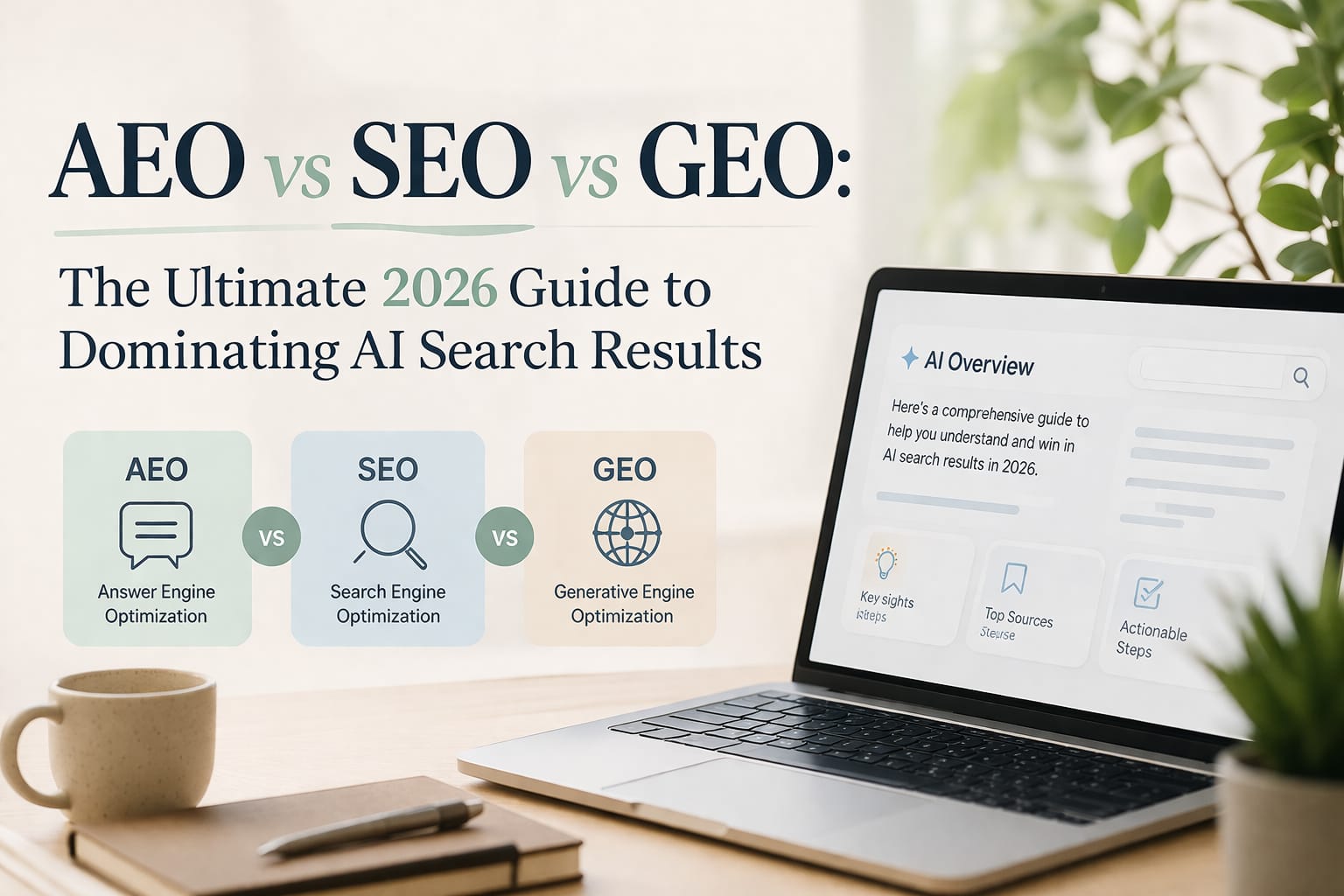
- The Trinity of Visibility: To rank #1 globally, you must integrate traditional SEO (Rankings), AEO (Answer Engine Optimization), and GEO (Generative Engine Optimization).
- Trust is the New Currency: With AI-generated content everywhere, search engines now prioritize E-E-A-T (Experience, Expertise, Authoritativeness, and Trustworthiness) and original research over simple keyword matching.
The digital landscape has fundamentally shifted. If you are still only focusing on keywords, your website is likely already becoming invisible. In 2026, nearly 30% of marketers report a decline in traditional organic traffic because AI systems now handle the “searching” for the user.
To survive, you need to understand that SEO is like organizing a massive library so people can find your book, but AEO is like being the specific quote the librarian reads out loud when a visitor asks a question.
1. What is SEO in 2026? (The Foundation)
SEO (Search Engine Optimization) is the strategic process of improving your website’s visibility in organic search results by matching user intent, creating helpful content, and optimizing technical performance to satisfy both human users and AI algorithms.
While it started in the 1990s as a way to “stuff” keywords, it is now a deeply technical and creative discipline focused on three core pillars.
The Three Pillars of Modern SEO
| Pillar | What It Focuses On | Goal |
| Technical SEO | Speed, security, and mobile-friendliness. | Ensuring search engines can crawl and index your site. |
| On-Page SEO | Content, keyword intent, and HTML elements. | Helping AI understand what each page is actually about. |
| Off-Page SEO | Backlinks, brand signals, and reputation. | Building authority so search engines trust your site as a source. |
Pro Tip: If you are moving an old store to a new site to improve your technical SEO, use the Instant Product Importer to migrate without the manual headache.
2. The Rise of AEO: Being the “Chosen One”
Answer Engine Optimization (AEO) is the art of structuring your content so that AI assistants (like Alexa, Siri, or ChatGPT) and Google’s AI Overviews can easily extract and present your answer directly to the user.
In 2026, we are in the Multi-source Synthesis Era. This means AI doesn’t just look at one page; it combines pricing from Site A, reviews from Site B, and features from Site C into one unified answer.
AEO vs. SEO: Key Differences Explained
| Feature | Traditional SEO | Answer Engine Optimization (AEO) |
| Primary Goal | Rank pages in a list. | Provide the direct answer in AI boxes. |
| Content Style | Detailed, long-form content. | Short, structured, extractable content. |
| User Intent | Deep research and comparison. | Quick, instant answers. |
| Platform | Google, Bing (Web Browsers). | Voice assistants, AI tools, LLMs. |
3. GEO: The Future of Contextual SEO
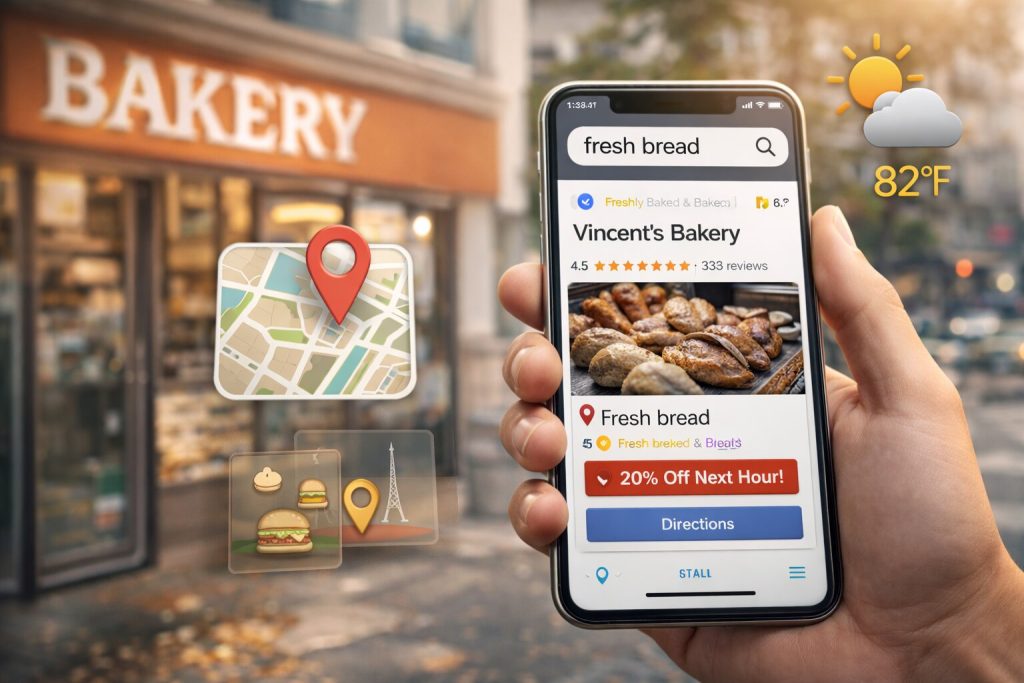
Generative Engine Optimization (GEO) takes everything a step further by focusing on context and personalization. GEO uses real-time data, like your location, the current weather, and your past browsing history, to create a search result just for you.
For example, if you search for “fresh bread,” a GEO-optimized site won’t just show a recipe; it will show a local bakery with a special offer valid for the next hour based on your specific location.
Why GEO is the “Linchpin” of 2026 Strategy
- Personalization: Content is dynamically altered to meet real-time needs.
- Zero-Click Dominance: Users get complete answers without clicking on external pages.
- Entity Authority: It’s about the relationship between topics, not just the words on the page.
Helpful Resource: To help AI “visualize” your products for better GEO and AEO rankings, use Promptingimage to create perfect descriptions for your image prompts.
4. The “Simple & Clear” Guide to Technical Excellence
Technical SEO is the engine under the hood. If your engine is broken, it doesn’t matter how pretty the car is.
Essential Technical Checklist for 2026
- Core Web Vitals (CWVs): Google measures how “stable” your site is. Your site must load in under 2.5 seconds (LCP) and respond to clicks instantly.
- HTTPS: Secure your site with an SSL certificate. Without it, browsers will flag you as “Not Secure,” killing your trust instantly.
- Mobile-First Indexing: Google sees your mobile site first. If your site doesn’t work on a phone, it doesn’t exist to Google.
- Image Optimization: Large images are the #1 reason sites are slow.
Strategic Tool: Use imagebulking to shrink your image sizes and inject metadata automatically. This makes your site fly and helps you hit those Core Web Vitals targets.
5. Engineering Content for AI Dominance
In 2026, content is no longer just for humans; it’s for machine consumption. To be featured in an AI Overview, your content must be easy for a bot to digest.
The “Inverted Pyramid” Content Strategy
- Start with the Answer: Every section should begin with a clear, factual 40-60 word summary.
- Use Structured Data (Schema): This is special code that tells AI, “This is a price,” or “This is a frequently asked question”.
- E-E-A-T and Originality: 66% of pros say original content is the top driver of success. AI can’t replicate your personal experience.
Important: For every image you upload, ensure it has accurate Alt Text. Altgeneratorai can handle this automatically, ensuring your images contribute to your SEO rather than slowing you down.
6. Career & Growth: The Business of SEO in 2026
The SEO industry is booming, projected to reach over $122 billion by 2028. Whether you are a business owner or a professional, the ROI remains solid—60% of companies report increased organic traffic despite AI disruption.
Average SEO Salaries (India 2026 Example)
| Role | Experience | Average Monthly Salary |
| Junior SEO Analyst | 1-2 Years | ₹20,000 – ₹35,000 |
| SEO Specialist | 3-5 Years | ₹50,000 – ₹80,000 |
| SEO Manager | 5-8 Years | ₹80,000 – ₹1,50,000 |
| Head of SEO | 10+ Years | ₹2,00,000+ |
Technical FAQ
Q1: How long does it take for SEO to work in 2026? SEO is a marathon. While minor progress happens in weeks, it usually takes 6 to 12 months of consistent effort to see major results for competitive terms.
Q2: What is the biggest threat to SEO? The biggest concern for 77% of professionals is that AI answers will reduce website clicks (Zero-click searches). This is why integrating AEO is vital.
Q3: Can I do SEO myself? Yes! By using platforms like Elementor and focusing on creating helpful, in-depth content that follows the E-E-A-T framework, you can make significant progress on your own.
Q4: Is link building still important? Absolutely. Backlinks are like “votes of confidence.” However, 2026 is about quality over quantity. One link from a top industry site is better than 1,000 spammy ones.
Resources & Citations
- AdLift India: AEO vs SEO Trends 2026
- LSEO: SEO in 2026 – Key Trends & Challenges
- Search Engine Journal: State of SEO 2026 Report
- Elementor: The Complete SEO Guide for 2026
- SEO.com: Essentials of Search Engine Optimization
- GUVI: Comprehensive SEO Guide 2026
- Hostinger Tutorials: Understanding SEO in 2026